Machine vision inspection, on every part you make.
Most plants bring us defect detection first, and quality control is usually the biggest win. But the same camera can also measure parts to spec, read codes and labels, and guide robots. We build all of it, on your parts, scoped to a payback you can verify.
It's a consulting engagement, not a box on a shelf: senior engineers scope it to your line, prove it out on a bench, and stand it up one station at a time.
What we're most often asked to inspect
These are the jobs that come up most, not the full list. Most plants start with quality control, where the payback is clearest. If your problem isn't here, ask; odds are it still fits under machine vision.
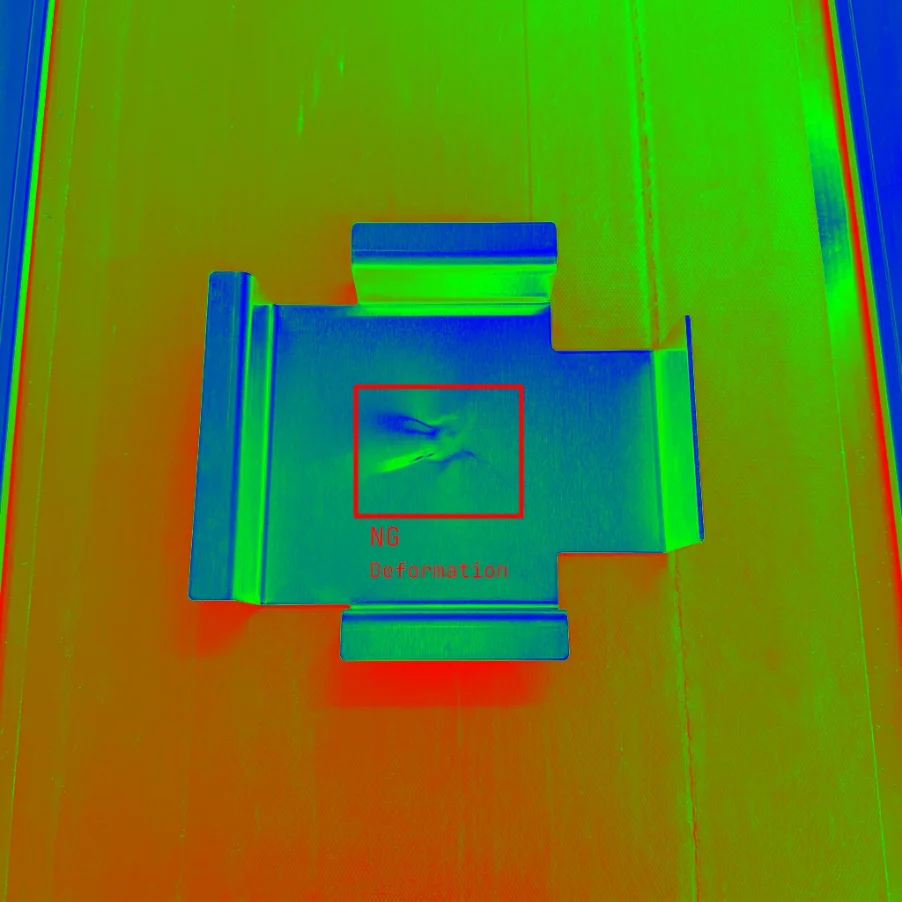
Catch defects and quality problems
AI judges each part the way a trained inspector would, on 100% of what you make, every shift, without fatigue. It's where most engagements begin.
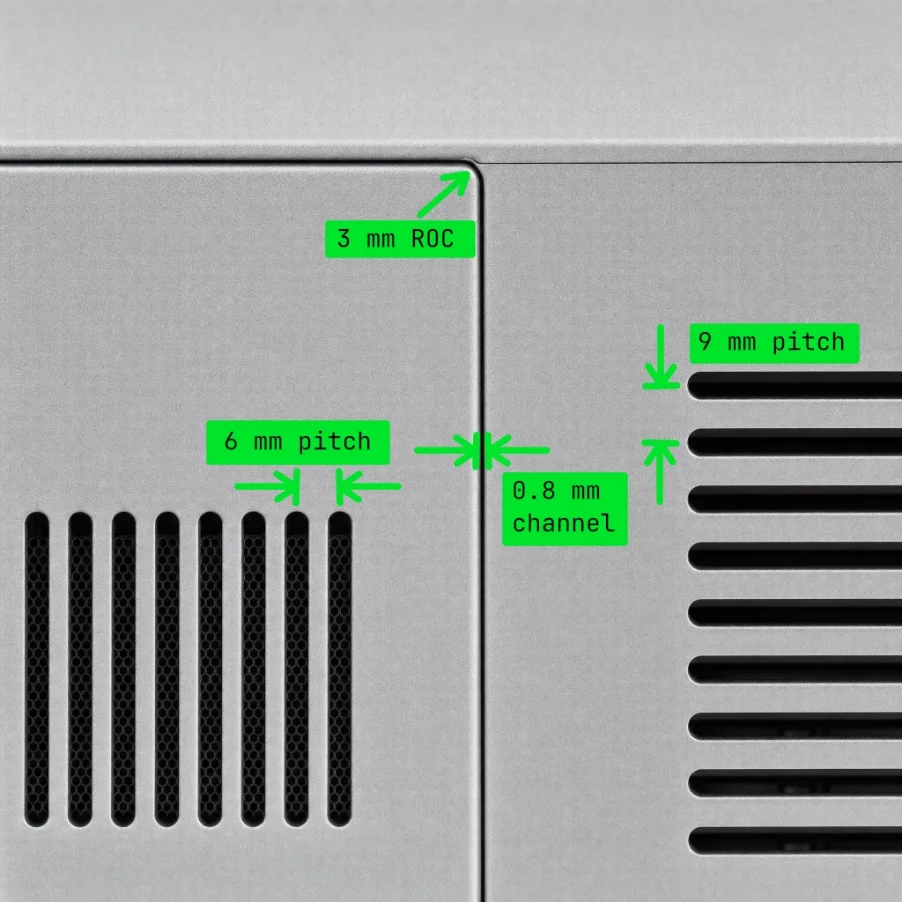
Check dimensions and tolerances
The camera works as a non-contact gauge: features, spacing, and geometry measured at line speed, with parts that drift out of spec flagged before they pile up.
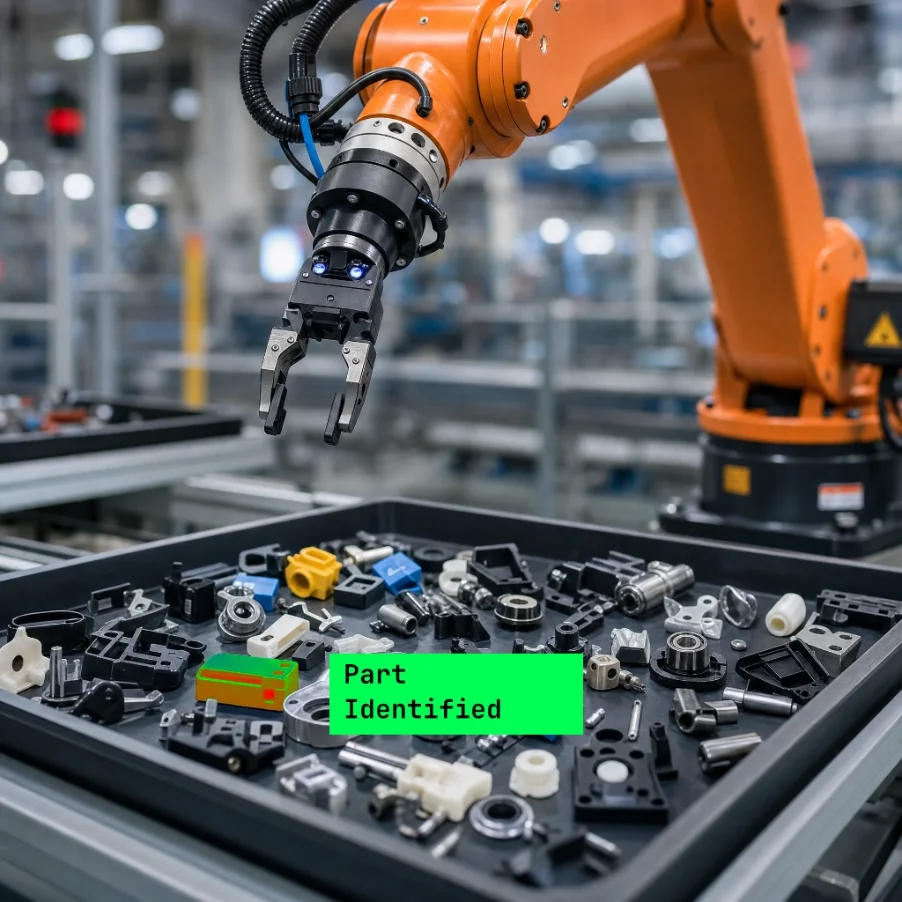
Steer robots and automation
Vision tells a robot where the part actually is, so it can pick, place, and align without fixed jigs, even when parts arrive loose or in varying positions.
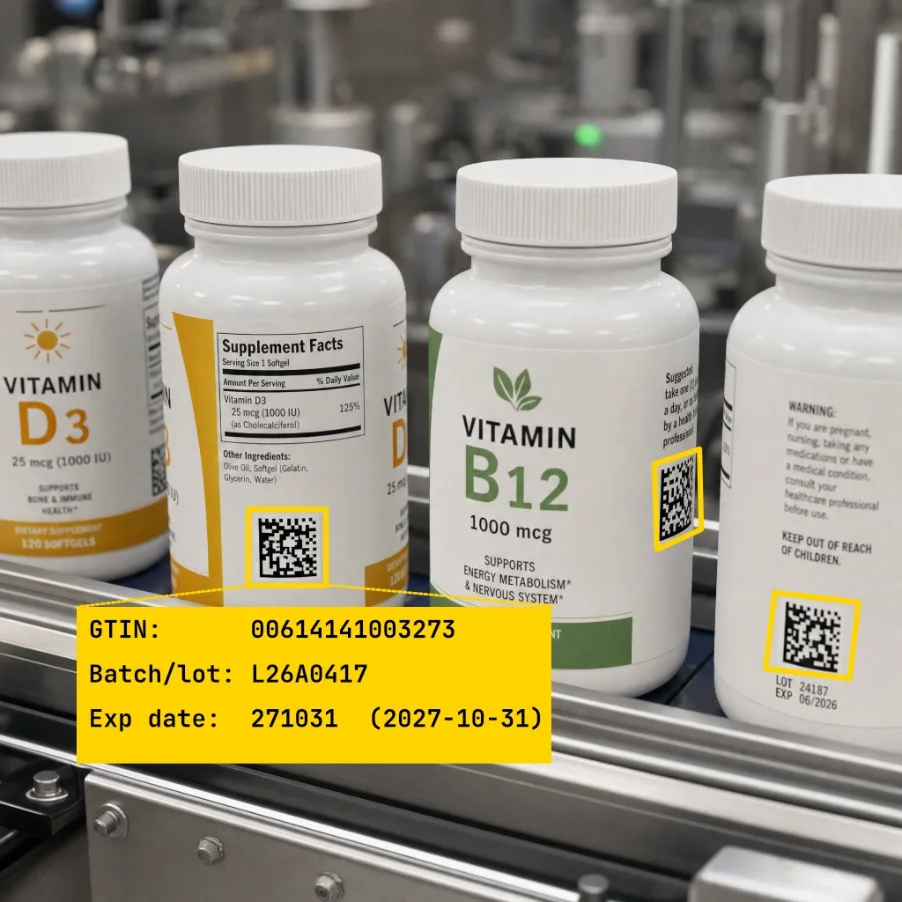
Read every code and label
Scan barcodes and 2D codes, read printed text and date codes, and log it all, so every part carries the right identity and the traceability record is there when a customer or auditor asks.
The right tool for the part, not one tool for everything
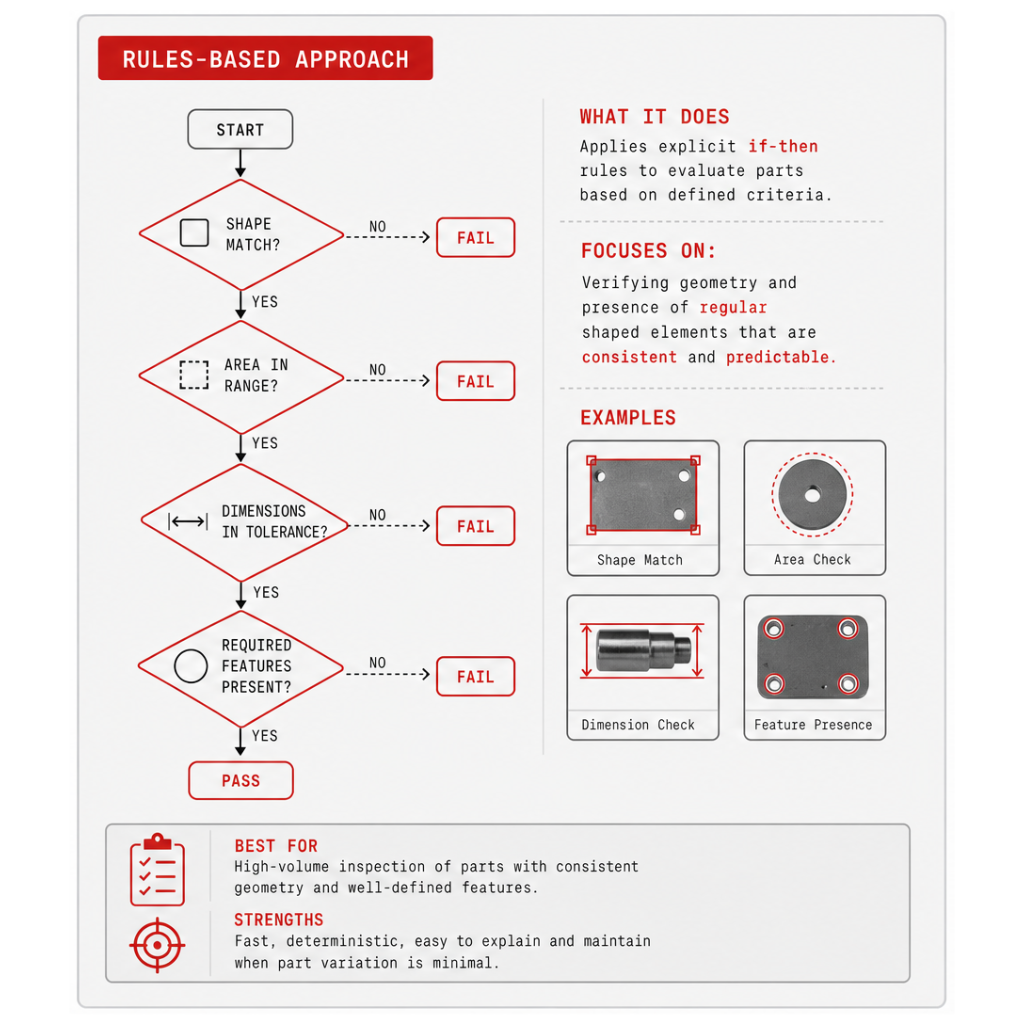
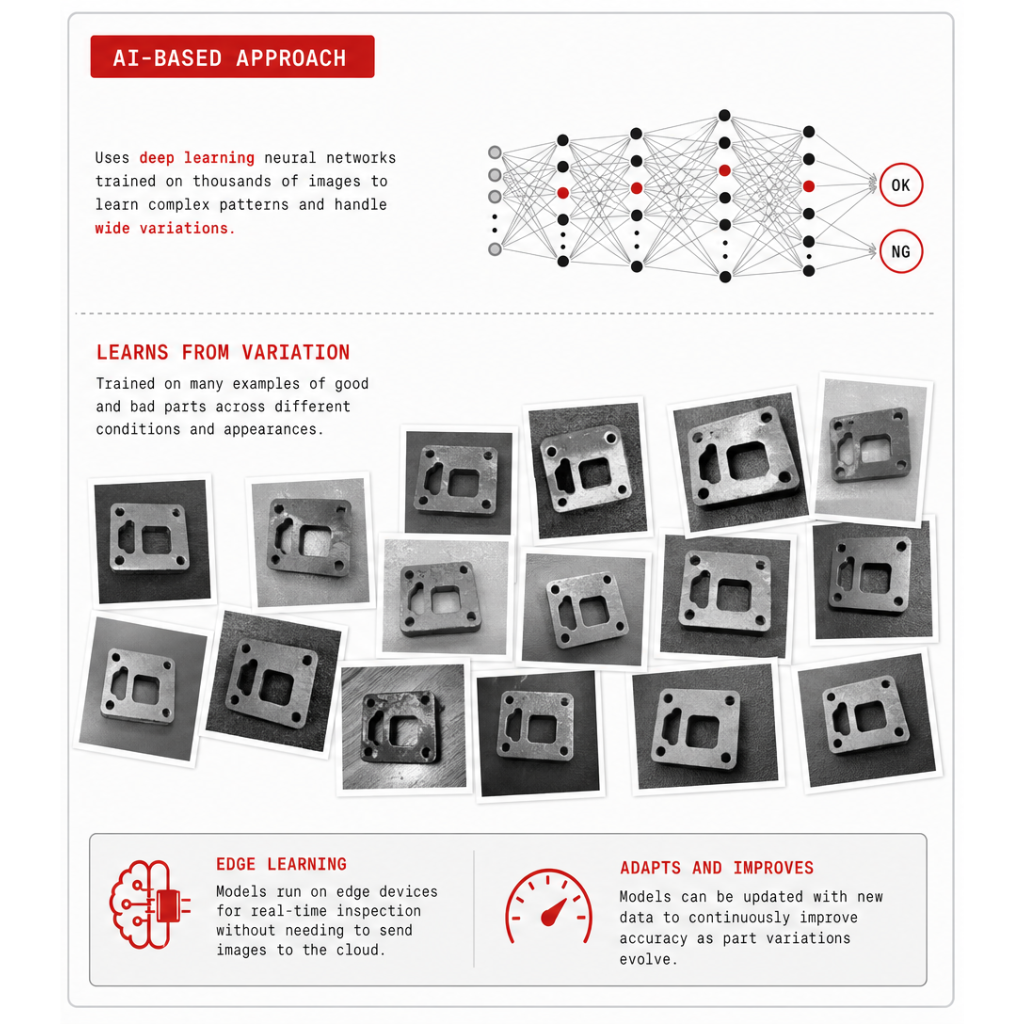
A lot of plants tried machine vision years ago and unplugged it. Usually the technology wasn't wrong; it was a single approach used on a job it couldn't cover. Rule-based vision still excels at precise, repeatable geometry; deep-learning AI handles the natural variation rules can't; edge vision runs it fast on the line. We combine them for your parts. If a past system failed, that mismatch is usually why.
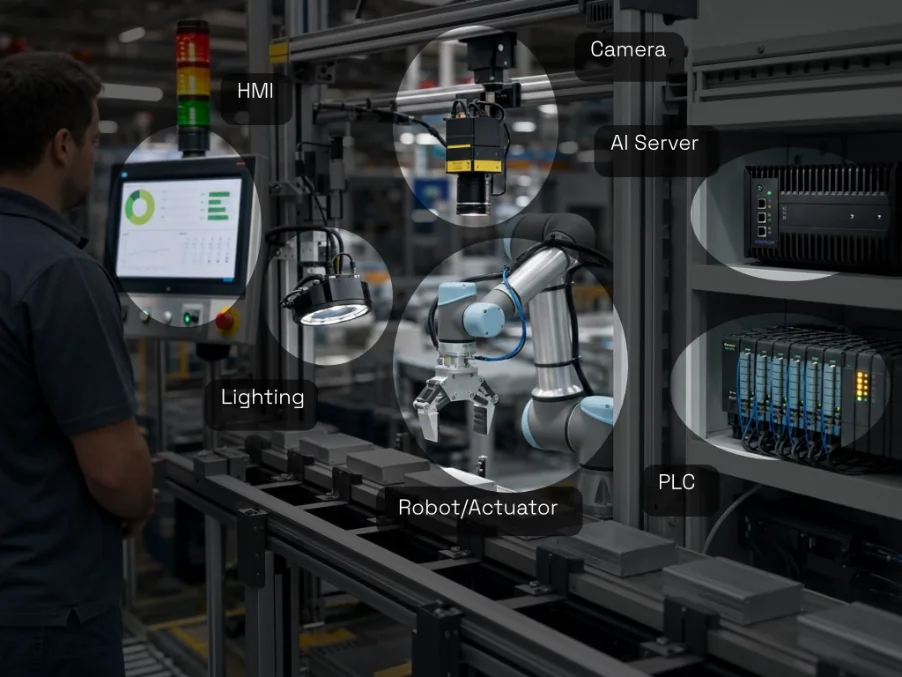
What a station includes
One station added to your line: the pieces below, sized to your parts and wired into how the line already runs. No line overhaul.
Off-the-shelf where it fits, purpose-built where it doesn't
We work with the major camera, lighting, and robotics brands and with commercial and open-source software. When an off-the-shelf tool fits, we use it. When your problem needs something that doesn't exist yet, we build it ourselves.
Either way, we choose what's most cost-effective for your parts and budget. It's built on open, standard components with full documentation, and you own what we deliver. No lock-in.
Four steps, each with its own go / no-go
Each step is a small, fixed-scope commitment. You can stop at any point and keep what we've delivered, including the study report.
We aim the first station at the biggest payback
Most plants have more than one thing worth automating. We rank them by return and start where the math is clearest, so the first system pays for the next.
The feasibility study puts real numbers against your line: the labor, scrap, and escape costs a system would offset. You decide with a payback estimate in hand. These are the levers we weigh:
FAQs
See what a camera can do on your line.
Send us a defect, a measurement, a part, or a code you're fighting and we'll tell you whether vision fits and what the payback would look like. Response within one business day.
Talk to an engineer →